
Roof repairs guide
Common causes of roof leaks: what to tell your roofer
Possible causes, safe observations and the details that help a roofer investigate a recurring leak.
By Roof & Power Co · Published
The short answer
Possible causes include broken tiles, damaged flashings, roof-sheet or fixing defects and drainage problems. Water can travel before appearing indoors, so an inspection traces the likely entry point before a repair is chosen.
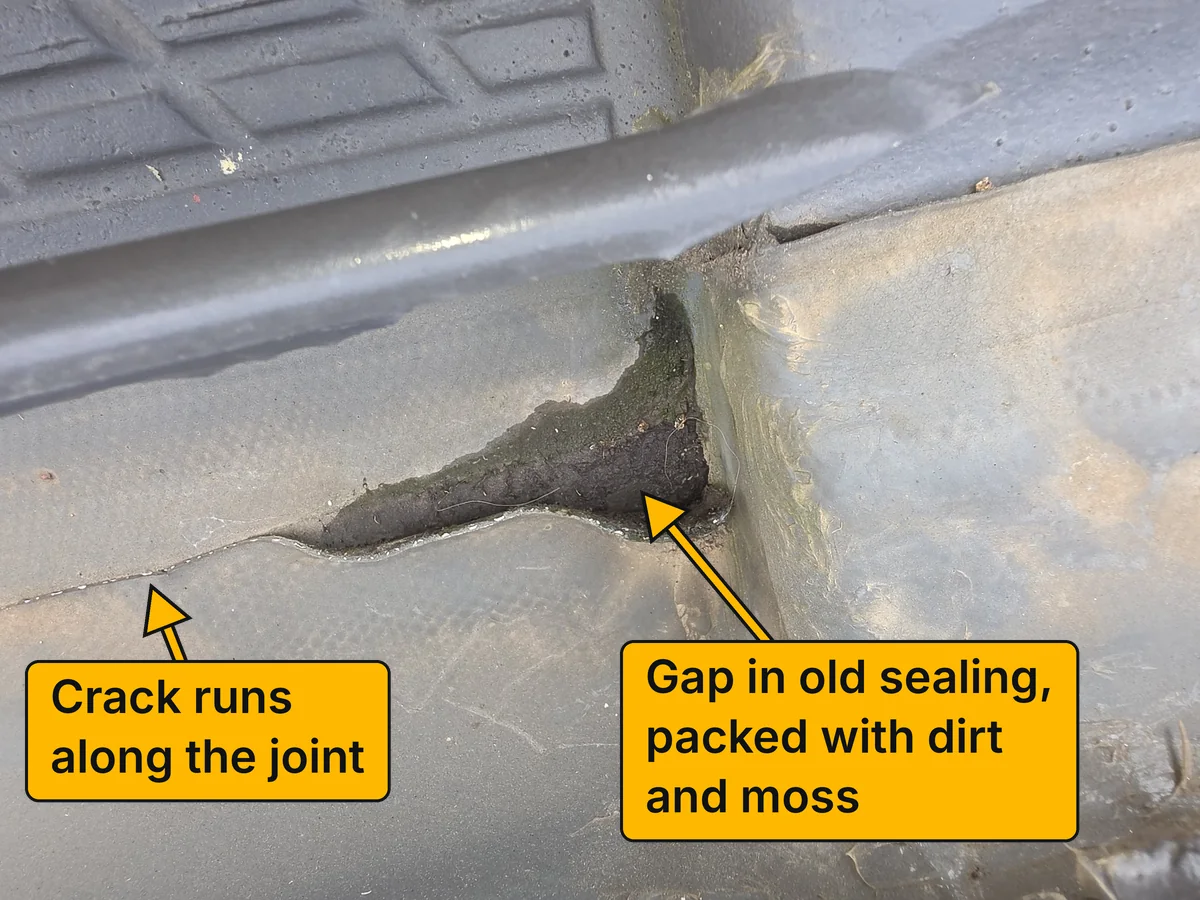
Several roof parts may need checking
An inspection checks the affected roof parts and follows the available evidence. A roof can have more than one defect.
| Area | What an inspection may investigate |
|---|---|
| Tiles or metal sheets | Visible damage, displacement and the condition of nearby fixings. |
| Ridge and hip capping | The condition of caps, bedding and pointing on a tiled roof. |
| Flashings and penetrations | Junctions near walls, vents, skylights and other roof openings. |
| Valleys, gutters and outlets | Debris, deterioration and whether water has a clear drainage route. |
| Previous repairs | What was changed before and whether the same symptoms returned. |
Tracing the leak from the ceiling stain
Water can travel before it becomes visible inside. Replacing the tile directly above a stain may therefore miss the cause. Describe where the stain appears, but leave the connection between that point and the roof entry to the inspection.
Our Smithfield project shows how the inspection informed that repair: damaged, poorly sealed flashing was identified on a roof where the owner reported that an earlier assessment had focused on a valley.
Record the circumstances safely
Keep a short record rather than attempting to recreate a leak. Useful details include:
- When it started and whether water appears during rain or afterwards.
- Whether it occurs in every shower or only during particular weather.
- The room and approximate location, with photos from a safe position.
- Any earlier work, its date and the written scope if you have it.
- Known roof material, number of storeys and access restrictions.
When water is actively entering
Keep people away from damaged ceilings, wet electrical fittings and unsafe areas. Move possessions or catch drips only if it is safe. Do not go onto a wet roof, enter an unsafe roof space or attempt to cover the roof during a storm.
For a life-threatening emergency call 000. For emergency assistance with floods or storms call NSW SES on 132 500. For a routine repair enquiry, discuss availability before arranging a visit; submitting an enquiry does not confirm immediate attendance.
Reference: NSW SES: Contact and emergency assistance
Separate investigation from the repair quote
Ask what can be inspected safely, whether further investigation is needed, and what the proposed repair is intended to address. Intermittent leaks may need more than one visit; dry weather can make the evidence less clear.
A useful written scope identifies the affected area and proposed work, including any exclusions. If broader deterioration is found, ask which work addresses the leak and which is optional maintenance. Base the decision on the inspected defect and the proposed repair.
Questions about this topic
Can a photo confirm what is causing a leak?
A photo can help plan the inspection and show visible damage, but it cannot reliably establish the complete water path or every concealed defect. A repair scope needs an appropriate assessment.
Does a leak mean I need a full roof restoration?
Not necessarily. An isolated defect may need a targeted repair. Widespread issues require a broader discussion after inspection; restoration is not an automatic response to a ceiling stain.
Sources and further reading
- NSW SES: Prepare your home
Roof and drainage checks for storm preparation; no universal cleaning interval.
- NSW SES: Contact and emergency assistance
Use 000 for life-threatening emergencies and 132 500 for emergency flood and storm assistance.
- Monier: Roof cleaning and maintenance
Tile roof maintenance and the distinction between bedding and pointing. Follow the instructions for your own roof products.
Sources checked on . The service scope for your property is confirmed separately in the written quote.